
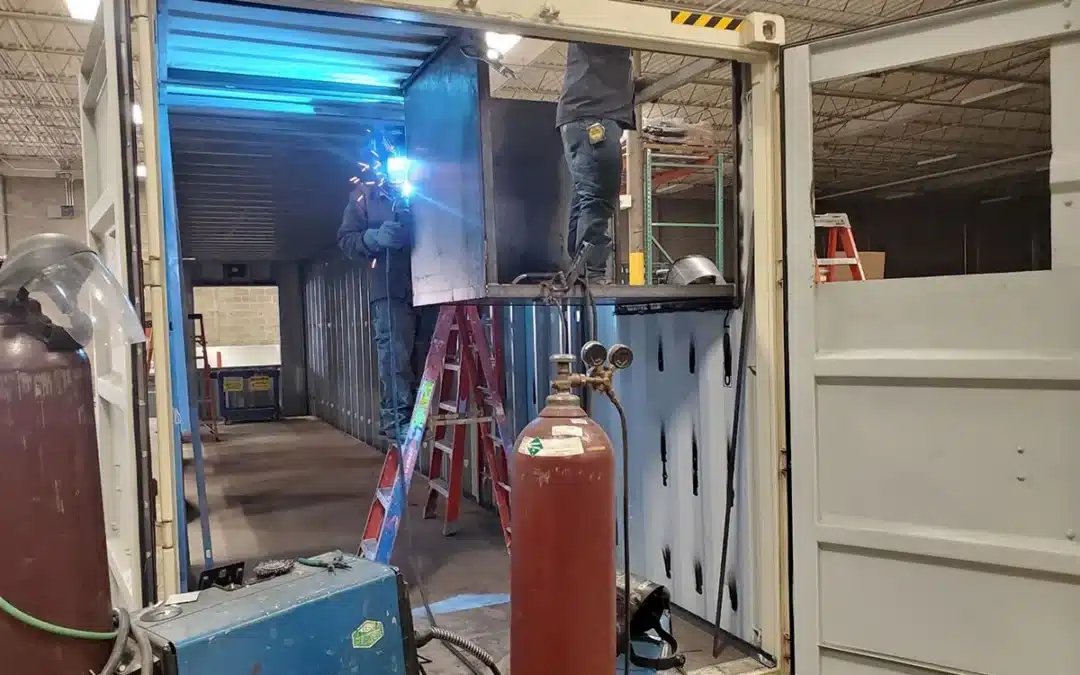
The Midwest’s frigid winters make it impractical to use a standard shipping container for temperature-sensitive storage or anything that requires power. However, with the right modifications, you can use your container for much more than basic storage, even when temperatures drop below freezing.
At Tom Kraemer Inc. (TKI), we offer customizable container and dumpster solutions for residential and commercial applications. Keep reading to learn what’s possible with an insulated shipping container modification that has heating and electrical upgrades.
How Does Insulation Prepare Shipping Containers for Cold Weather?
During Midwest winters, an uninsulated container can become nearly as cold as the air outside, making it difficult to store temperature-sensitive items or use the space comfortably.
An insulated shipping container modification slows heat transfer through the container’s walls and ceiling, helping maintain more consistent interior conditions. It also reduces the risk of interior condensation.
Here are three things to consider when insulating a shipping container:
- Insulation materials: Compare options based on thermal performance, installation requirements, and available space.
- Moisture control: Choose an insulation approach that helps prevent moisture from collecting on the steel.
- Interior space: Account for how insulation and interior finishes affect usable space.
Insulation alone won’t maintain a specific interior temperature, however. If your application requires consistent warmth during freezing weather, you’ll get better temperature control by pairing insulation with a heating system.
When Should You Add Heating to a Shipping Container?
Heating can be a great addition if you want to protect delicate items or use the space for work or recreation.
- Temperature-sensitive storage: Protect tools, equipment, and materials from frost.
- Construction offices: Set up comfortable remote workspaces for employees who are on site in the winter.
- Residential applications: Use the container as an extension of your home or office, whether for storage or a functional space.
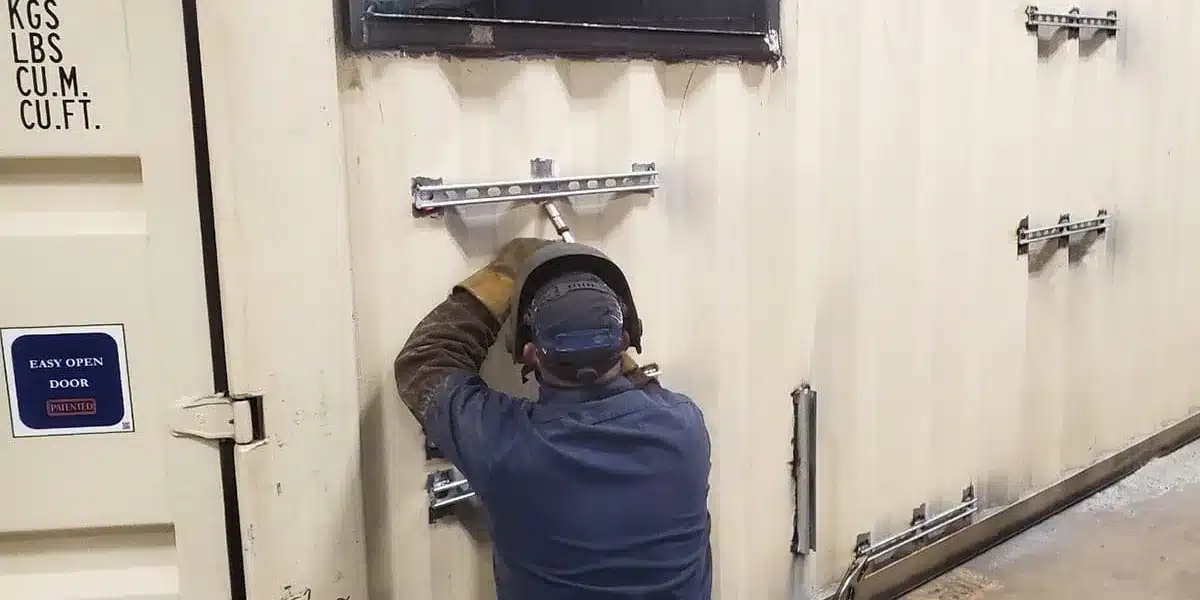
The right heating setup depends on your container’s size, insulation performance, desired interior temperature, and available power supply. If you want to incorporate heating, plan to do it at the same time as your insulated shipping container modification. This way, you can choose individual solutions that work well together and suit your container’s intended use.
What Electrical Modifications Support Year-Round Container Use?
Adding electricity to your shipping container opens up more possibilities for how you use the space. You can run power tools in a workshop, operate equipment at a job site, or keep your storage area well-lit.
Depending on your intended use, electrical modifications can include:
- Interior and exterior lighting for visibility during shorter winter days.
- Outlets to power tools, equipment, computers, and other devices.
- Electrical connections for heating, cooling, and ventilation systems.
Determine how much power your equipment will require and whether your site has an adequate electrical supply. Plan your electrical layout alongside other container modifications so you can position wiring and outlets before adding interior walls. Always install wiring, outlets, and connections to meet applicable safety codes.
Customize Your Shipping Container for Year-Round Use
Get more out of your shipping container, no matter the season. Stabilize interior temperatures with an insulated shipping container modification, add heating to keep your space warm, A/C to keep your space cool, and run electrical wiring so you can install lighting and outlets.
Whether you need a few practical upgrades or a fully customized container, Tom Kraemer Inc. will help you find a solution that fits your application, budget, and specifications.
Explore TKI’s container modifications and request a quote when you’re ready to build out a functional space you can use year-round.
Frequently Asked Questions
What are the benefits of an insulated shipping container modification?
An insulated shipping container modification helps reduce heat transfer, stabilize interior temperatures, and improve comfort during the changing seasons. Insulation can also help protect temperature-sensitive inventory and equipment, making your container more practical for storage, workshops, and other year-round applications.
Does insulating a shipping container prevent condensation?
Insulation can help reduce condensation by limiting contact between warm, moist air and cold steel surfaces. However, insulation alone doesn’t guarantee condensation prevention. Proper moisture control, ventilation, and installation methods are important for managing humidity and protecting stored materials.
Can you add heating and electrical systems to an existing shipping container?
Yes, you can modify existing shipping containers to accommodate heating, lighting, outlets, and other electrical features. The installation requirements depend on the container’s condition, available power supply, and intended use. Tom Kraemer Inc. can help you evaluate modification options and plan upgrades that fit your needs.